Why Artemis II’s lunar flyby will offer unprecedented views
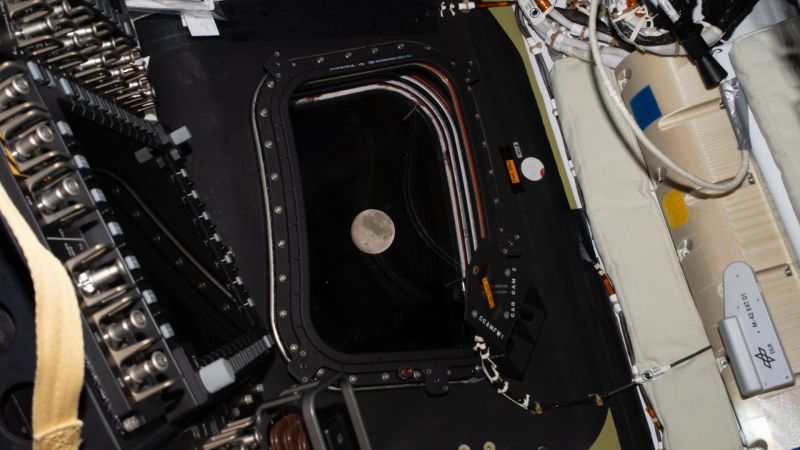
The highly anticipated lunar flyby of the Artemis II mission will take four astronauts on a pioneering survey of the moon Monday, including the rarely glimpsed lunar far side, which always faces away from Earth.
The crew, including NASA’s Reid Wiseman, Victor Glover and Christina Koch, and Canadian Space Agency astronaut Jeremy Hansen, will see features on the lunar surface that human eyes have never observed before.
In fact, the astronauts have already experienced what mission control in Houston described as “moon joy” as they’ve drawn closer to the silvery orb over the past few days.
Using a camera equipped with a 400-millimeter lens has enabled them, from a distance of more than two-thirds of the way to the moon, to point out specific lunar craters, features and topography — including the vast Orientale Basin, which had never been seen or photographed by humans prior to this mission. The crater, which is 600 miles (965 kilometers) wide, represents a key transition region between the near and far sides of the moon.
“The moon we are looking at is not the moon you see from Earth whatsoever,” Koch said.
But how much will the astronauts actually be able to observe at an estimated distance of 4,070 miles from the moon — and what could it reveal about enduring lunar mysteries that scientists are eager to solve? Apart from extensive training to observe the moon and its unique features, the astronauts possess one of humanity’s greatest scientific tools: the gift of observation with their own eyes.
“Even from as far as away as 4,000 miles, there are still things that the human eye can pick up with granularity that are important to the science community,” said Judd Frieling, Artemis II ascent flight director.

While Apollo astronauts also circled the moon at even closer distances and spied some of the mysterious far side, the circumstances of the Artemis II flyby differ in a few ways.
The nine Apollo missions that ventured away from Earth orbit were limited as to what parts of the moon they observed based on which regions were illuminated by sunlight during the flight and the trajectories of their capsules.
“When the Apollo missions launched, they prioritized launching into windows where the near side was illuminated because that’s where the missions landed,” said Dr. Kelsey Young, lead for NASA’s Science Mission Directorate, at a news conference on Saturday. “The far side was not illuminated at the time when they were in orbit.”
The Orion capsule, named Integrity by its crew, will also fly by the moon at a greater distance. Apollo command modules flew around…